Programs, not platforms: Why computer science education needs more than online tools
 San Francisco, CA — January 2026 — Computer science education today often starts with platforms.
Tools like Code.org, CodeHS, and Codecademy have made it easier for schools to introduce coding concepts, especially in classrooms where resources are limited or dedicated CS staff are hard to come by. These platforms play an important role in expanding access to technical content, and many educators rely on them as an entry point.
But access to curriculum is not the same as access to opportunity.
At Mission Bit, we work alongside schools — and we see, firsthand, where platform-based learning reaches its limits. For many students, especially those taking their first-ever coding class, learning computer science requires more than lessons on a screen. It requires people, structure, and environments that support confidence and growth.
That’s why Mission Bit is a program, not a platform.
Platforms teach content. Programs build context.
Platform-based tools are designed to scale. They offer structured lessons, self-paced modules, and standardized pathways that help students learn foundational skills. In many classrooms, they’re an essential learning resource.
Mission Bit’s model is different by design.
Rather than offering a standalone curriculum, Mission Bit provides a full program: live, instructor-led classes; curriculum developed in-house; industry standard equipment; field trips and exposure to real tech spaces; and continued pathways beyond a single course. Our work doesn’t end when a lesson does — it extends into how students experience learning, how they see themselves in tech, and whether they feel supported enough to keep going.
We don’t replace platforms. We provide what platforms alone cannot.
Learning grows through connection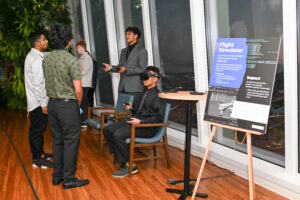
Most Mission Bit students are first-time coders. Many come from communities historically underrepresented in tech. In this context, how students experience learning matters just as much as what they are learning.
Confidence, trust, and belonging are foundational.
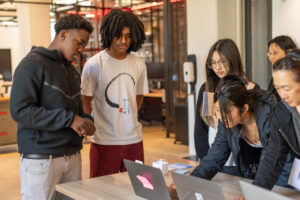
In Mission Bit classrooms, time spent building community is intentional. Check-ins, collaboration, and moments to pause or celebrate are integrated into the learning environment, helping students feel comfortable asking questions and working through challenges together.
Access is about infrastructure, not just cost
Many platforms are free or low-cost, which is critical. But meaningful access goes beyond affordability — it depends on whether students have the tools, support, and exposure needed to fully participate.
Mission Bit students receive industry-standard equipment, including MacBooks and software like Figma and VS Code, so they can build skills that translate beyond the classroom. That access matters — as Luis noted, without Mission Bit’s laptop loan program, he “wouldn’t have been able to participate” at all.
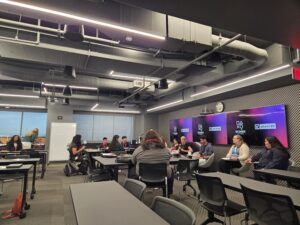 Through field trips and on-site experiences— like last year’s visit to the Playstation office, where students toured the space and heard directly from employees across technical and non-technical roles, and Strava, where students explored the workspace and received career advice from team members— students gain exposure to real tech environments, helping them better understand what careers in tech can look like.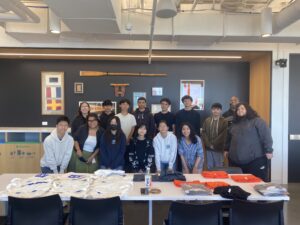
Mission Bit also works closely with schools and families, managing communication, outreach, and scheduling to meet students where they are — during the school day and after school. As afterschool programs across the city face defunding, this role has become even more essential.
Platforms can deliver content. Programs build the infrastructure that allows students to show up, stay engaged, and keep learning.
Pathways, not just lessons
All Mission Bit courses are introductory by intention. High school is a time for exploration, and students deserve the chance to discover what’s possible without pressure to specialize too early.
While platforms often focus on lesson completion or skill progression, Mission Bit focuses on pathways: continued learning opportunities, mentorship, and exposure to what comes next. The goals aren’t mastery after one class — it’s curiosity, confidence, and momentum.
For many students, Mission Bit is the first place where computer science feels human, accessible, and worth pursuing — a starting point rather than an endpoint. As Web Design student Kayley M. shared during our annual gala, Mission Bit made her feel like her “ideas and background actually belonged in tech.” That sense of belonging is difficult to replicate through platforms alone — and it’s often the difference between a student completing a course and a student imagining a future in the field.
That spark of curiosity often deepens into a desire to keep going. As VR student Raylene A. reflected, the course “made me realize that I want to expand my knowledge about tech and other opportunities” and encouraged her to pursue “a new journey in the tech industry.” Group-based projects also foster diverse pathways — not just technical ones. Luis S. shared that collaboration “helped me form new friendships” and pushed him to grow both in programming and teamwork.
These experiences reflect a broader truth: students aren’t just learning skills — they’re learning who they can become.
Why the distinction matters
Platforms like Code.org, CodeHS, and Codecademy have expanded access to computer science education — and that work matters. But equity requires more than access to tools.
It requires programs that invest in relationships, remove structural barriers, and create environments where students feel seen, supported, and capable of belonging in tech.
Mission Bit exists in that space — not just teaching students how to code, but helping them imagine themselves as people who can.
Learn more about how Mission Bit builds access, belonging, and pathways in tech