Curiosity, adaptability, and the human side of AI: Mission Bit students visit Snap Inc.
Tatiana Sanchez | September 28, 2026
During a visit to Snap’s San Francisco office, Mission Bit students explored unconventional career paths, skills that last throughout a career, and the responsibility that comes with using AI.

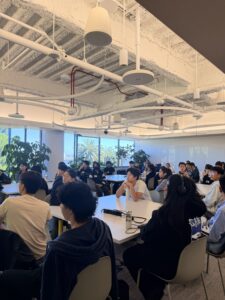
San Francisco, California — September 2026 — Mission Bit students visited Snap’s San Francisco office for a behind-the-scenes look at the people and career paths behind a global technology company. Hosted by Chandelle Wiebe Hakim and the Snap team, the visit included an office tour, a career panel, and small-group networking sessions with Snap employees.
Throughout the visit, students heard an encouraging message: there is no single path into technology. Panelists described studying subjects ranging from film and biology to electronics and game development before building careers in tech. Their stories showed students that career paths are rarely linear—and that exploring an interest, experimenting with a new tool, or teaching yourself a skill can open unexpected opportunities.
That message is especially meaningful for young people who may not yet know which role they want to pursue. Instead of needing to map out an entire career, students can begin by noticing what interests them, trying new things, and developing skills they can carry into many different workplaces.
The conversation then turned to how students can use AI thoughtfully. One panelists offered a playful piece of advice:
 “You use AI to write code, and then you use AI to understand the code—and then you use your brain in between.”
That advice captured a central lesson from Mission Bit students’ visit to Snap: AI can accelerate the work, but judgment, curiosity, and responsibility still belong to the person using it.
Snap employees described using AI to research ideas, create starting points for code, and build prototypes more efficiently. At the same time, they emphasized that AI can make mistakes. Anyone using it must be prepared to review its output, understand how it works, and take responsibility for the final result.
The discussion challenged the idea that technical knowledge alone determines success. When students asked what employers seek in early-career candidates, the speakers emphasized communication, reliability, leadership, and perseverance. As Chandelle Wiebe Hakim of Snap Philanthropy reminded them, “Life is a group project, whether or not you like it.”
These lessons helped connect the technical and interpersonal skills students develop at Mission Bit with the realities of the workplace. Programming languages and tools will continue to change, but the ability to ask questions, work with others, seek help, and adapt will remain valuable.

Following the panel, students joined Snap employees for small-group speed networking. The format gave them space to ask candid questions about internships, college, AI, and what day-to-day work at a technology company is actually like.
Reflecting on the partnership, Chandelle shared:
“Authentic relationships are at the heart of Snap Philanthropy. We were thrilled to partner with Mission Bit for their 2026 summer programming, donating our space and volunteering hands-on to help expand equitable access to tech education. Working with students was deeply inspiring, and we wish every summer scholar the absolute best as they continue their journeys!”
For Mission Bit student Chris M., those conversations made a previously abstract career path feel more concrete:
“Before the field trip, I was confused about what people at tech companies actually did,” he said. “Talking to them helped me see what working in tech can really look like.”
That kind of exposure matters. Meeting professionals and seeing a technology workplace firsthand can help students imagine themselves in roles that once felt distant or unfamiliar. Students left with a clearer understanding of the range of careers available to them—and the confidence that they can begin building toward those careers now.
Mission Bit extends our deepest gratitude to Chandelle Wiebe Hakim, Josh Kowarsky, Lily Guo, Robbie Holmes, and everyone at Snap who made the experience possible.